Koenji Rotary Park
2023
2050年、自動運転が普及した未来における駅前空間—高円寺をケーススタディとして—
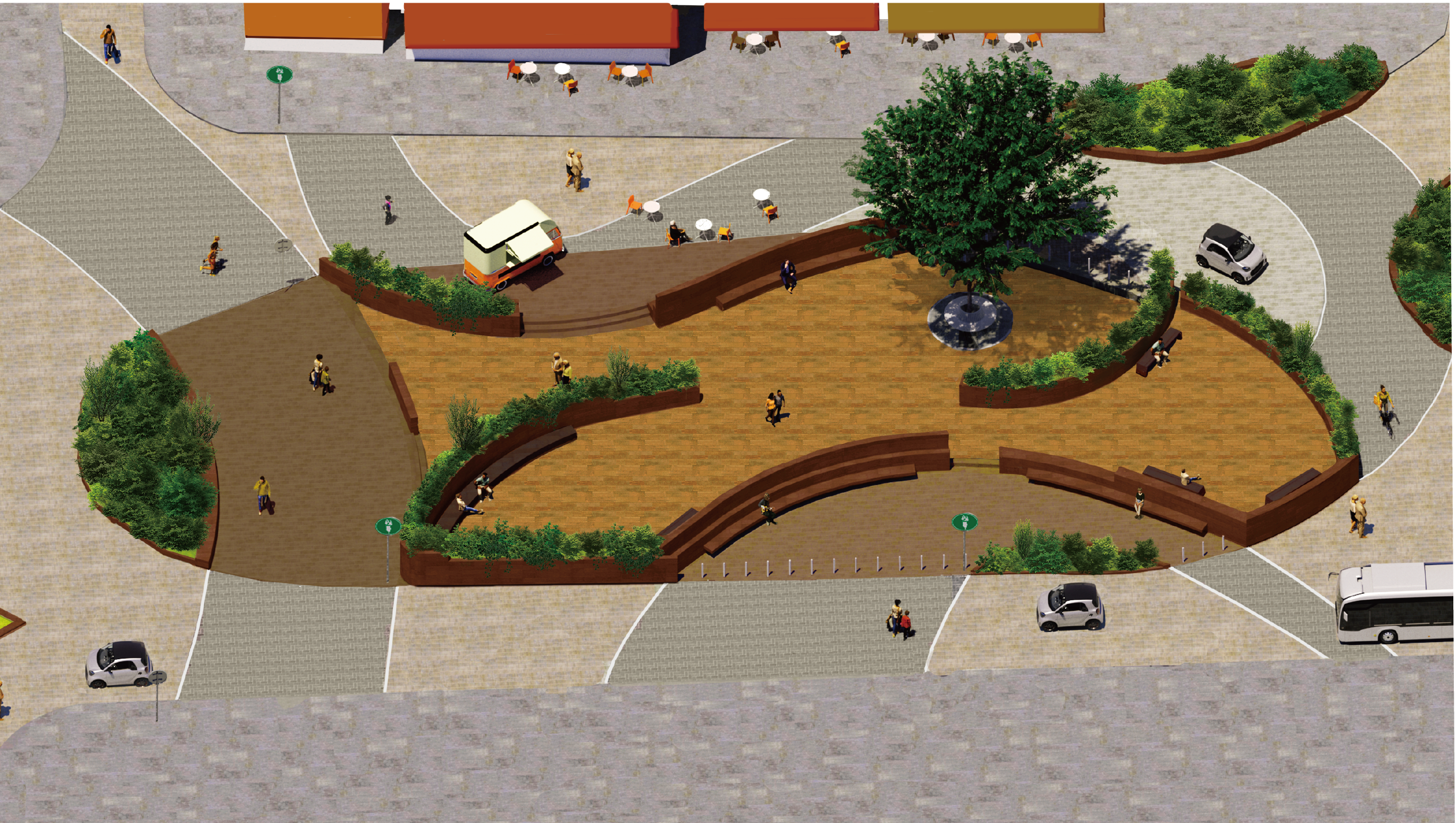
本提案では、「歩行者天国という制度(ソフト)」と「ランドスケープデザイン(ハード)」の双方からのアプローチにより、モビライゼーション時代の「交通」を中心とした駅前空間とは異なる、「歩行者」を中心とした新たな駅前空間を創出する。 具体的には、駅前広場を囲む道路の定期的な歩行者天国化と、それを前提とした一体的なランドスケープデザインにより、街の中心に巨大なコミュニティ広場を形成する(ここではこれをロータリー空間と呼ぶ)。
これまで十分に議論されてこなかった、「行政による法制度(道路を歩行者天国として開放・設定する杉並区)」と、「地元の主体性を活かしたエリアマネジメント(駅前空間の使い方を設計・運営するJR東日本や地元商店街の共同運営体)」の視点を横断し、 高円寺固有のストリートカルチャーを次世代へと継承・発展させる都市モデルを提示する。 This proposal aims to create a new pedestrian-centric station-front space that departs from the conventional transit-oriented designs of the mobility era, achieved through a dual approach combining "soft" policy (the pedestrian-zone system) and "hard" infrastructure (landscape design). Specifically, by periodically transforming the roads surrounding the station square into car-free zones and applying an integrated landscape design based on this premise, the project forms a massive community plaza at the heart of the town. Furthermore, this proposal bridges two perspectives that have historically been overlooked in tandem: administrative legal frameworks (Suginami City as the entity designating the pedestrian zones) and community-led area management (JR East and the local shopping district as the entities designing and managing the utilization of the space). Ultimately, it presents an urban model designed to inherit and evolve Koenji’s unique street culture for the next generation.
本提案では、「歩行者天国という制度(ソフト)」と「ランドスケープデザイン(ハード)」の双方からのアプローチにより、モビライゼーション時代の「交通」を中心とした駅前空間とは異なる、「歩行者」を中心とした新たな駅前空間を創出する。 具体的には、駅前広場を囲む道路の定期的な歩行者天国化と、それを前提とした一体的なランドスケープデザインにより、街の中心に巨大なコミュニティ広場を形成する(ここではこれをロータリー空間と呼ぶ)。
これまで十分に議論されてこなかった、「行政による法制度(道路を歩行者天国として開放・設定する杉並区)」と、「地元の主体性を活かしたエリアマネジメント(駅前空間の使い方を設計・運営するJR東日本や地元商店街の共同運営体)」の視点を横断し、 高円寺固有のストリートカルチャーを次世代へと継承・発展させる都市モデルを提示する。 This proposal aims to create a new pedestrian-centric station-front space that departs from the conventional transit-oriented designs of the mobility era, achieved through a dual approach combining "soft" policy (the pedestrian-zone system) and "hard" infrastructure (landscape design). Specifically, by periodically transforming the roads surrounding the station square into car-free zones and applying an integrated landscape design based on this premise, the project forms a massive community plaza at the heart of the town. Furthermore, this proposal bridges two perspectives that have historically been overlooked in tandem: administrative legal frameworks (Suginami City as the entity designating the pedestrian zones) and community-led area management (JR East and the local shopping district as the entities designing and managing the utilization of the space). Ultimately, it presents an urban model designed to inherit and evolve Koenji’s unique street culture for the next generation.